Key takeaways
- Nylon is durable, stretchy and quick-drying – perfect for activewear – but conventional nylon is made from crude oil.
- Regenerated nylon such as ECONYL® is made from waste – old fishing nets, fabric scraps, carpets – and can be recycled again and again.
- Its manufacturer reports up to 90% lower global-warming impact compared with fossil-based nylon.
- The most sustainable legging is the one you wear for years: buy quality, wash gently, repair and recycle.
On the PHYSTEP website you will see two small logos: “Made in Europe” and ECONYL®. We chose Italian eco-nylon for our leggings because comfort, durability and responsibility belong together. Here is what eco-nylon actually is, why it matters and what you can do to make your activewear more sustainable.
Why nylon is used in activewear
Nylon (polyamide) was invented in the 1930s and quickly became a hero material: strong, light, elastic, abrasion-resistant and quick to dry. In leggings it gives that smooth, soft feel and the ability to stretch and recover hundreds of times. The downside: conventional nylon is produced from petroleum through an energy-intensive process, and nylon products – from clothes to fishing gear – can persist in the environment for decades.
The ghost-net problem
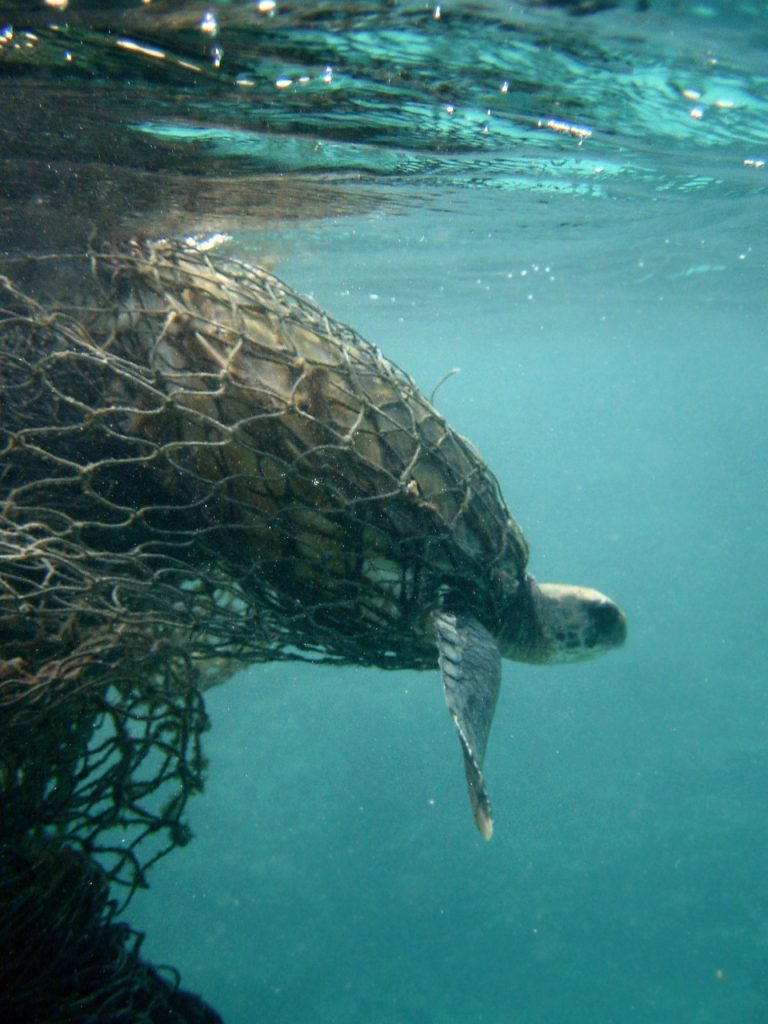
Fishing nets are often made from nylon. When nets are lost or abandoned at sea, they become “ghost nets” that continue to catch fish, turtles, seabirds and marine mammals. A frequently cited UN estimate (FAO/UNEP, 2009) put abandoned, lost or discarded fishing gear at around 640,000 tonnes per year, roughly a tenth of marine litter. Recovering this material and turning it into something useful solves two problems at once.
What is ECONYL® regenerated nylon?
ECONYL® is a regenerated nylon 6 yarn produced by the Italian company Aquafil. It is made from nylon waste collected around the world – fishing nets, fabric offcuts from the textile industry, old carpet flooring and industrial plastic.
How it is made
- Rescue: nylon waste is collected from landfills, oceans and industry.
- Clean & sort: the waste is cleaned and the nylon separated from other materials.
- Depolymerise: the nylon is broken down chemically into its original building block, caprolactam.
- Purify & repolymerise: the caprolactam is purified and turned back into nylon polymer – with the same quality as virgin nylon.
- Spin & re-use: the polymer becomes yarn for textiles. At the end of its life it can, in principle, be regenerated again.
Because the material returns to the molecular level, regenerated nylon does not lose quality the way some mechanically recycled materials do. Aquafil reports that, compared with nylon from oil, ECONYL® can reduce the global-warming impact of the material by up to 90% (according to its own life-cycle assessments).
Benefits – and honest limits
| Benefits | Limits to keep in mind |
|---|---|
| Turns waste into a high-quality yarn | Still a synthetic fibre that can shed microfibres in the wash |
| Lower carbon footprint than virgin nylon (manufacturer data) | Blends with other fibres (e.g. polyester) are harder to recycle |
| Same performance: stretch, durability, quick drying | Collection systems for old garments are still developing |
| Supports clean-up of ghost nets and textile waste | The greenest option is still wearing items longer |
PHYSTEP leggings are made of ECO nylon 22% / polyester 78%. The eco-nylon gives softness, stretch and comfort against the skin; polyester gives shape stability and durability. We are transparent about the blend because we believe honest information is part of sustainability.
Made in the EU: the other half of the story
Sustainability is not only about fibres. Every pair of PHYSTEP leggings is designed, developed and handmade in Riga, Latvia. A short supply chain means fewer transport kilometres, strict EU rules on chemicals (REACH) and working conditions, and tight quality control – which leads to longer-lasting products. We don’t outsource any part of the development process.
7 ways to make your activewear more sustainable
- Buy fewer, better pieces you can wear for many occasions – one pair of PHYSTEP covers office, gym and hike.
- Wash less and colder. Air your leggings between light wears; wash at 30 °C.
- Wash full loads – less friction means fewer microfibres.
- Use a microfibre-catching wash bag or a washing machine filter.
- Skip the tumble dryer – it shortens fabric life and uses a lot of energy.
- Repair small damage early.
- Pass on or recycle leggings you no longer wear via textile collection points.
Our full routine is in the leggings care guide. Curious about the product itself? See PHYSTEP Leggings or our story.
Frequently asked questions
Is regenerated nylon as strong as virgin nylon?
Yes. Because regenerated nylon such as ECONYL® is broken down to its chemical building block and rebuilt, its properties are equivalent to nylon made from oil. That is why it is used in demanding products such as swimwear, carpets and activewear.
Why aren’t PHYSTEP leggings 100% eco-nylon?
Leggings need a balance of softness, stretch recovery, opacity and shape stability. Our blend (22% eco-nylon, 78% polyester) was chosen after extensive testing so that the Phy-TP® taping system stays precisely in place and the leggings remain comfortable all day. We continue to look for ways to increase the recycled share without compromising function.
Do synthetic leggings release microplastics?
All synthetic textiles – recycled or not – can shed microfibres, mostly during the first washes and in high-friction, hot cycles. Washing cold, using full loads, avoiding the tumble dryer and using a microfibre-catching wash bag or filter significantly reduces shedding.
How long should good leggings last?
With proper care, quality performance leggings can be worn regularly for years. Extending the life of a garment is one of the most effective ways to reduce its environmental footprint – often more effective than any material choice.
What should I do with old leggings?
If they are still wearable, pass them on. Otherwise, use textile collection points – since 2025, EU member states are required to organise separate collection of textile waste. Avoid putting textiles in general household waste.
Is “made in the EU” really more sustainable?
Not automatically – but it helps. EU production is subject to strict chemical (REACH), labour and environmental rules, and shorter transport routes reduce emissions. Combined with in-house production in Riga, it lets us control quality closely, which makes our leggings last longer.
Sources & further reading
- Macfadyen G, Huntington T, Cappell R. Abandoned, lost or otherwise discarded fishing gear. UNEP Regional Seas Reports and Studies No. 185; FAO Fisheries and Aquaculture Technical Paper No. 523. 2009.
- Aquafil S.p.A. – ECONYL® Regeneration System, product and environmental information (manufacturer data).
- European Commission. EU Strategy for Sustainable and Circular Textiles. 2022.
Tags: eco nylon, ECONYL, ghost nets, sustainability
Written by the PHYSTEP team in Riga with input from our physiotherapist. Our articles are for general education and are not a substitute for personal medical advice. About us