Key takeaways
- The 10,000-step goal started as a marketing slogan for a Japanese pedometer in the 1960s – not as a scientific threshold.
- Large studies show that every extra step counts: going from about 2,000 to 7,000 steps a day is linked to dramatically lower risks of early death, heart disease, dementia and depression.
- For younger adults, benefits for mortality keep growing up to roughly 8,000–10,000 steps; for adults over 60 they level off around 6,000–8,000.
- Each 1,000 steps burns roughly 30–50 kcal depending on body weight and pace – PHYSTEP is designed to add up to 20% on top while you walk.
“10,000 steps a day” may be the most famous health target in the world. Your phone counts towards it, your smartwatch vibrates when you reach it and your colleagues compete over it. But where does the number come from – and do you really need it? We looked at the biggest studies to give you a clear, practical answer, plus a 4-week plan to build the habit.
Where does the 10,000-step goal come from?
The number dates back to Japan in the mid-1960s. Around the 1964 Tokyo Olympics, a pedometer was marketed under the name manpo-kei, which translates roughly as “10,000-step meter”. The figure was catchy – the Japanese character for 10,000 even looks a little like a walking person – and it stuck. It was not based on a study showing that 10,000 is a magic threshold.
That does not make it a bad goal. It simply means scientists had to go back and test it – and over the last few years they have, with tens of thousands of participants wearing step-counting devices.
What the big studies found
2019: older women and the 4,400-step surprise
A study published in JAMA Internal Medicine followed about 16,000 women with an average age of 72. Women who took around 4,400 steps a day had a significantly lower risk of death during follow-up than women who took about 2,700. The benefit kept increasing with more steps before levelling off at around 7,500 steps per day.
2022: 15 cohorts, nearly 50,000 adults
The Steps for Health Collaborative pooled data from 15 international studies in The Lancet Public Health. Taking more steps was associated with a progressively lower risk of death – up to a level that varied by age. For adults aged 60 and older, the risk levelled off at about 6,000–8,000 steps per day; for adults younger than 60, at about 8,000–10,000 steps per day.
2025: 7,000 steps – the realistic sweet spot
In July 2025 researchers led by Professor Melody Ding at the University of Sydney published the most comprehensive review so far, again in The Lancet Public Health: 57 studies from 35 cohorts, looking not only at mortality but at heart disease, cancer, type 2 diabetes, dementia, depression and falls. Compared with 2,000 steps a day, 7,000 steps a day was associated with substantially lower risk across many outcomes – including a 47% lower risk of death from any cause, a 38% lower risk of dementia and a 22% lower risk of depressive symptoms. Beyond 7,000 steps, extra benefits were modest for most outcomes – though some, like cardiovascular health, continued to improve.
| Daily steps | What the evidence suggests |
|---|---|
| < 3,000 | Very low activity – the highest health risks. Any increase helps. |
| 4,000 – 5,000 | Already meaningful benefits compared with very low activity, especially for older adults. |
| 7,000 | A realistic target linked to large risk reductions for mortality, dementia, depression and more. |
| 8,000 – 10,000 | Further benefits for younger adults; supports weight management and cardiovascular fitness. |
| > 10,000 | Great for active people and weight-loss goals; extra health benefits are smaller per step. |
How many calories do steps burn?
Walking burns energy in proportion to your body weight and pace. A practical rule of thumb: about 0.5 kcal per kilogram of body weight per 1,000 steps at a normal pace (faster or uphill walking burns more). Most people take roughly 1,300–1,400 steps per kilometre.
| Body weight | Per 1,000 steps | 7,000 steps | 10,000 steps | 10,000 steps in PHYSTEP* |
|---|---|---|---|---|
| 55 kg | ≈ 28 kcal | ≈ 190 kcal | ≈ 275 kcal | up to ≈ 330 kcal |
| 70 kg | ≈ 35 kcal | ≈ 245 kcal | ≈ 350 kcal | up to ≈ 420 kcal |
| 85 kg | ≈ 43 kcal | ≈ 300 kcal | ≈ 425 kcal | up to ≈ 510 kcal |
| 100 kg | ≈ 50 kcal | ≈ 350 kcal | ≈ 500 kcal | up to ≈ 600 kcal |
*Applies the up-to-20% effect from Phystep’s own veloergometry tests. Estimates only; individual values vary. Try our interactive calculator.
Walking 10,000 steps every day at 70 kg adds up to roughly 10,000 kcal a month. That is why steps are such a powerful – and underrated – tool for weight management, especially combined with a sensible diet. Read more about everyday calorie burn in our guide to NEAT.
Why steps work better than you think
- Low barrier: no gym, no equipment, no changing clothes – especially if your everyday leggings work while you walk.
- Low injury risk: walking is gentle on joints compared with running or jumping.
- Adds up: 10 minutes of walking is about 1,000 steps. Six short walks equal a long one.
- Mental health: walking, especially outdoors, is linked to better mood and lower stress.
- Blood sugar: short walks after meals help your body handle glucose.
Your 4-week plan to more steps
Start from your current average, not from 10,000. Check your phone’s health app for last week’s daily average, then:
| Week | Target | Focus |
|---|---|---|
| 1 | Average + 1,000 | One 10-minute walk after lunch or dinner. |
| 2 | Average + 2,000 | Walking meetings or phone calls; take the stairs. |
| 3 | Average + 3,000 | Get off public transport one stop early; park further away. |
| 4 | 7,000 – 10,000 | A longer weekend walk or hike; keep the daily habits. |
15 easy ways to add steps
- Walk while you’re on the phone.
- Use the bathroom or printer on another floor.
- Set a reminder to stand up and walk every 45–60 minutes.
- Have a “walk and talk” instead of a coffee meeting.
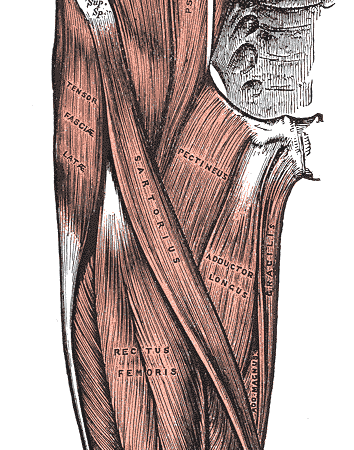
- Take the stairs – they also load your thighs strongly.
- Go for a 10-minute walk after each main meal.
- Walk or cycle short trips instead of driving.
- Do one loop of the supermarket before you start shopping.
- Pace while waiting for the kettle or microwave.
- Walk your children to school or activities.
- Explore a new neighbourhood at the weekend.
- Listen to podcasts only while walking – an easy habit trigger.
- Join a step challenge with friends or colleagues.
- Walk to a colleague’s desk instead of sending a message.
- Wear clothes you can move in – like PHYSTEP leggings that work with every step.
Make every step work harder
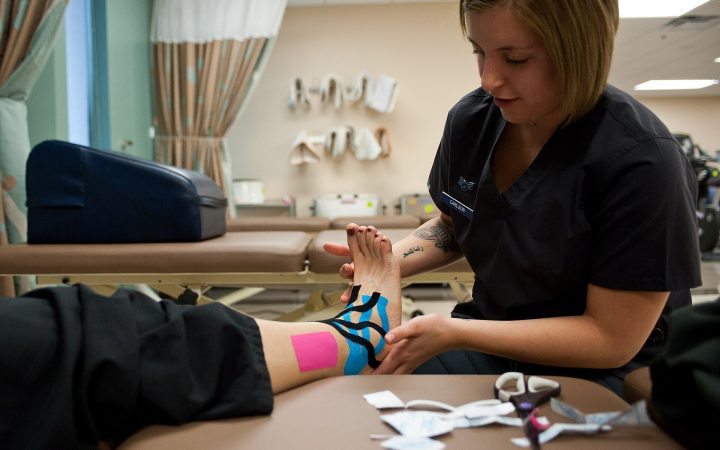
PHYSTEP was created for people who don’t have extra hours for the gym. Our Phy-TP® taping system stimulates the quadriceps and hamstrings while you walk, and in our own tests increased calorie expenditure by up to 20% during movement. That means your 7,000 steps could work like 8,400. Want structure? Join our 4-week 10,000 Step Challenge or start with PHYSTEP Leggings.
Sources & further reading
- Lee I-M, Shiroma EJ, Kamada M, et al. Association of step volume and intensity with all-cause mortality in older women. JAMA Internal Medicine. 2019;179(8):1105–1112.
- Paluch AE, Bajpai S, Bassett DR, et al. Daily steps and all-cause mortality: a meta-analysis of 15 international cohorts. The Lancet Public Health. 2022;7(3):e219–e228. Full text (PMC)
- Ding D, et al. Daily steps and health outcomes in adults: a systematic review and dose-response meta-analysis. The Lancet Public Health. 2025.
- World Health Organization. WHO guidelines on physical activity and sedentary behaviour. 2020.
General information only – not medical advice. If you have health conditions, talk to your doctor before significantly increasing your activity.
Tags: 10000 steps, calories, step challenge, walking

Written by the PHYSTEP team in Riga with input from our physiotherapist. Our articles are for general education and are not a substitute for personal medical advice. About us