Key takeaways
- Compression leggings apply even (sometimes graduated) pressure to the whole leg – mainly for support, circulation and recovery.
- Kinesiology-taping leggings such as PHYSTEP apply targeted stimulation along specific muscles – designed to make those muscles work more during movement.
- Regular fashion leggings are about comfort and style, with no functional pressure system.
- Choose by goal: recovery and support → compression; more muscle work and calorie burn in daily life → PHYSTEP.
Walk into any sports shop and you will see “compression”, “sculpting”, “shaping” and “performance” leggings side by side. They all look tight and black. So what is the real difference – and where do kinesiology-taping leggings like PHYSTEP fit in? This guide gives you a clear comparison.
Three types of leggings, three different jobs
1. Regular / fashion leggings
Made for comfort and style. They stretch, they look good, but they don’t apply meaningful pressure to the muscles and have no functional system. Perfect for lounging, travel and casual outfits.
2. Compression leggings
Compression garments apply firm pressure to the whole leg, measured in millimetres of mercury (mmHg). Medical compression stockings are often graduated – tighter at the ankle, looser at the thigh – to help blood flow back towards the heart. Sports compression tights borrow this idea for training and recovery.
What does research say? Reviews of sports compression garments suggest they can help with recovery – for example less perceived muscle soreness and faster recovery of strength after hard exercise – while effects on performance during exercise are generally small. Many athletes also like the supported, “held together” feeling.
3. Kinesiology-taping leggings (PHYSTEP)
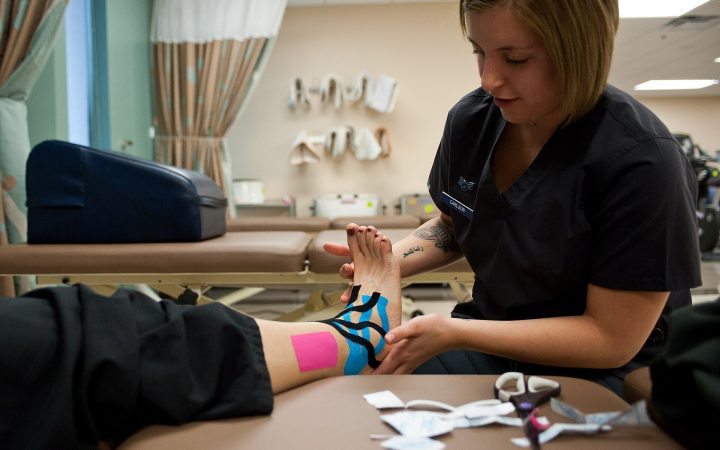
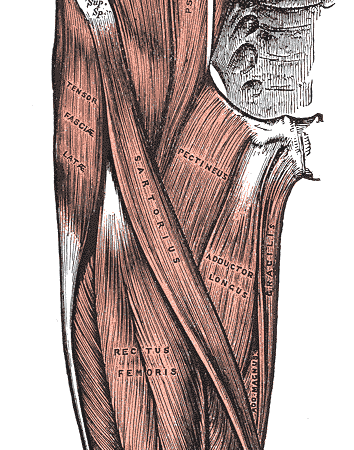
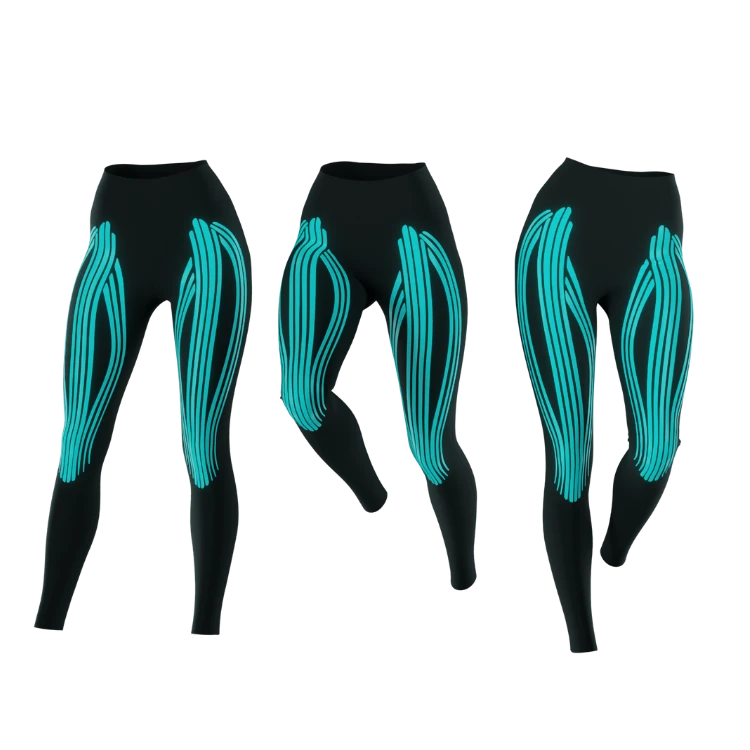
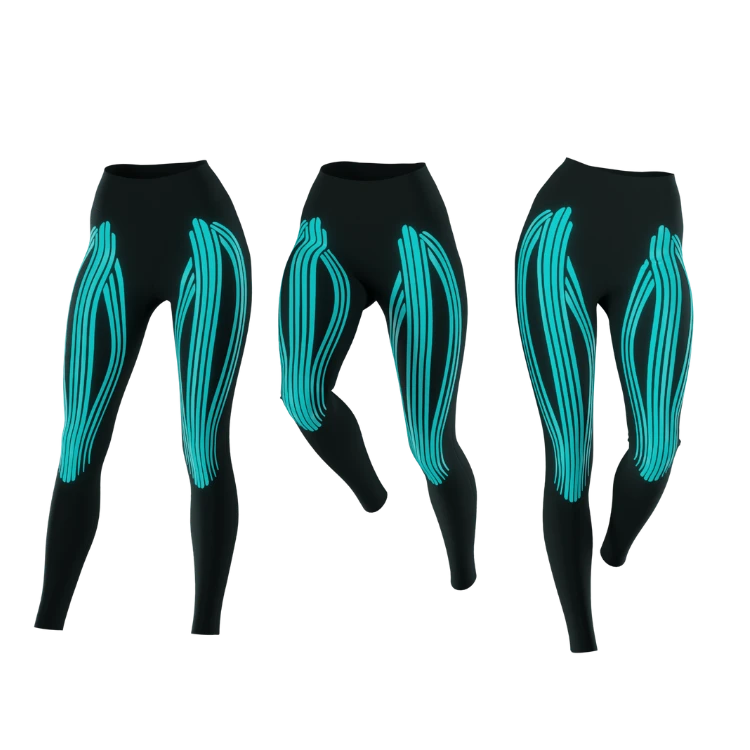
PHYSTEP takes a different approach: instead of squeezing the whole leg, it integrates a silicone taping system (Phy-TP®) that follows the muscle bellies of the front and back thigh – just like kinesiology tape applied by a physiotherapist. The goal is stimulation, not compression: the muscles work against additional input with every movement. In Phystep’s own veloergometry tests this increased calorie expenditure by up to 20% during movement. Read the background in Kinesiology taping explained.
Side-by-side comparison
| Regular leggings | Compression leggings | PHYSTEP (kinesiology taping) | |
|---|---|---|---|
| Main purpose | Comfort, style | Support, circulation, recovery | Muscle stimulation, extra calorie burn while moving |
| How it works | Stretch fabric | Firm, even or graduated pressure on the whole leg | Targeted silicone taping lines over 6 thigh muscles |
| Muscles | No effect | Stabilises and “relieves” muscles | Stimulates quadriceps & hamstrings |
| Feel | Soft, relaxed | Tight, sometimes restrictive | Snug and comfortable, gentle pressure along the lines |
| Best for | Everyday casual wear | Long flights, recovery, endurance sport | Office, errands, walking, gym, hiking – all-day movement |
| Visual effect | Depends on cut | Smoothing | Slimming – lines encircle the upper thigh |
| Claimed calorie effect | None | None | Up to +20% during movement (Phystep tests) |
Is PHYSTEP a compression legging?
No – and this is the question we hear most. As we explain in our FAQ: compression relieves muscles and improves blood circulation, while Phystep stimulates muscles with its design-protected technology. The wearer burns calories instead of only relieving the muscles. That is also why PHYSTEP does not need the extreme tightness of high-compression tights to work – the effect comes from where the pressure is applied, not how hard the whole garment squeezes.
Which one should you choose?
Choose compression leggings if…
- you want to support recovery after hard endurance sessions or races,
- you travel on long flights and want circulation support (for medical compression, ask your doctor),
- you like a very firm, “locked-in” feel.
Choose PHYSTEP if…
- you sit a lot and want your everyday steps to count more,
- you want one pair for the office, chores, the gym and a hike,
- you want toned-looking legs and a slimming visual effect,
- you like the idea of physiotherapy-inspired taping without sticky tape.
Choose regular leggings if…
- comfort and style are all you need – for relaxing, travel or casual outfits.
How to judge any “functional” legging
- Ask what it actually does. “Sculpting” is marketing; look for a clear mechanism.
- Look for testing. Has the brand tested its claim, and does it explain how? (Ours: veloergometry.)
- Check the fit guidance. Functional garments only work in the right size – see the PHYSTEP size guide.
- Check materials and origin. PHYSTEP: ECO nylon 22% / polyester 78%, handmade in the EU.
- Check returns. We offer 30 days.
Frequently asked questions
Can compression leggings help me burn more calories?
Not directly. Compression is designed to support tissues and circulation; studies on compression garments focus on recovery, soreness and perceived fatigue – not on increasing energy expenditure. If extra calorie burn during daily movement is your goal, a stimulation-based design like Phy-TP® is built for that purpose.
Are kinesiology leggings tighter than compression leggings?
Usually not. High-compression tights can feel very firm over the whole leg. PHYSTEP fits snugly like a good pair of activewear leggings, with additional, targeted pressure along the taping lines. Many customers wear them for a full working day.
Can I sleep in PHYSTEP or compression leggings?
We don’t recommend sleeping in PHYSTEP – the stimulation is designed for movement, and your skin and muscles benefit from a break. Sleeping in sports compression is also generally unnecessary unless advised by a healthcare professional.
Who should be careful with tight leggings?
If you have circulation problems, diabetes with reduced sensation in the legs, skin conditions, varicose veins or are pregnant, ask your doctor before wearing any tight-fitting or compression garment for long periods. Stop wearing the garment if you notice numbness, tingling, pain or skin irritation.
How do I know my PHYSTEP fits correctly?
The waistband sits comfortably at your natural waist, the fabric is smooth without wrinkles, and the taping zones are centred on the front and back of the thighs. If the leggings slide down or the lines sit near your knees, the size is too big – see our size guide or ask for size advice.
Do kinesiology leggings replace physiotherapy taping?
No. A physiotherapist adapts tape to your specific injury or condition. PHYSTEP is everyday activewear inspired by the same principle – designed to make healthy muscles work more during normal movement, not to treat injuries.
Sources & further reading
- Brown F, Gissane C, Howatson G, et al. Compression garments and recovery from exercise: a meta-analysis. Sports Medicine. 2017;47(11):2245–2267.
- Engel FA, Holmberg HC, Sperlich B. Is there evidence that runners can benefit from wearing compression clothing? Sports Medicine. 2016;46(12):1939–1952.
- PHYSTEP FAQ: “Are Phystep compression leggings?” – phystep.com/faq.
Compression stockings for medical conditions should only be used on medical advice.
Tags: activewear, buying guide, compression leggings, kinesiology leggings
Written by the PHYSTEP team in Riga with input from our physiotherapist. Our articles are for general education and are not a substitute for personal medical advice. About us