Key takeaways
- Fat loss happens when you burn more energy than you take in – exercise helps by raising expenditure and preserving muscle.
- The best fat-loss exercises use large muscle groups (legs and glutes) and can be done consistently.
- Our top 6: HIIT, squats, lunges, step-ups/stairs, brisk walking and cycling.
- You can’t spot-reduce fat, but you can make the muscles underneath stronger and firmer.
There is no single magic exercise for fat loss – but some movements give you much more “burn for your buck” than others. Here are six exercises we love at PHYSTEP, how to do them safely, and a simple weekly plan that fits into a busy life.
First, the basics of fat loss
- Energy balance: you lose fat when you consistently use more energy than you eat. A deficit of about 7,700 kcal corresponds roughly to 1 kg of body fat.
- Movement adds up: planned workouts and everyday activity (NEAT) both count.
- Strength matters: training your muscles helps you keep lean mass while losing fat.
- Consistency beats intensity: the best plan is the one you will still follow in three months.
- Guidelines: the WHO recommends 150–300 minutes of moderate (or 75–150 minutes of vigorous) activity per week plus muscle-strengthening on 2+ days.
1. High-Intensity Interval Training (HIIT)
HIIT workouts are one of the most time-efficient ways to burn calories. You alternate short bursts of hard effort with rest or easy movement. The most famous format comes from a 1996 study by Japanese researcher Izumi Tabata: 20 seconds all-out, 10 seconds rest, eight rounds (4 minutes).
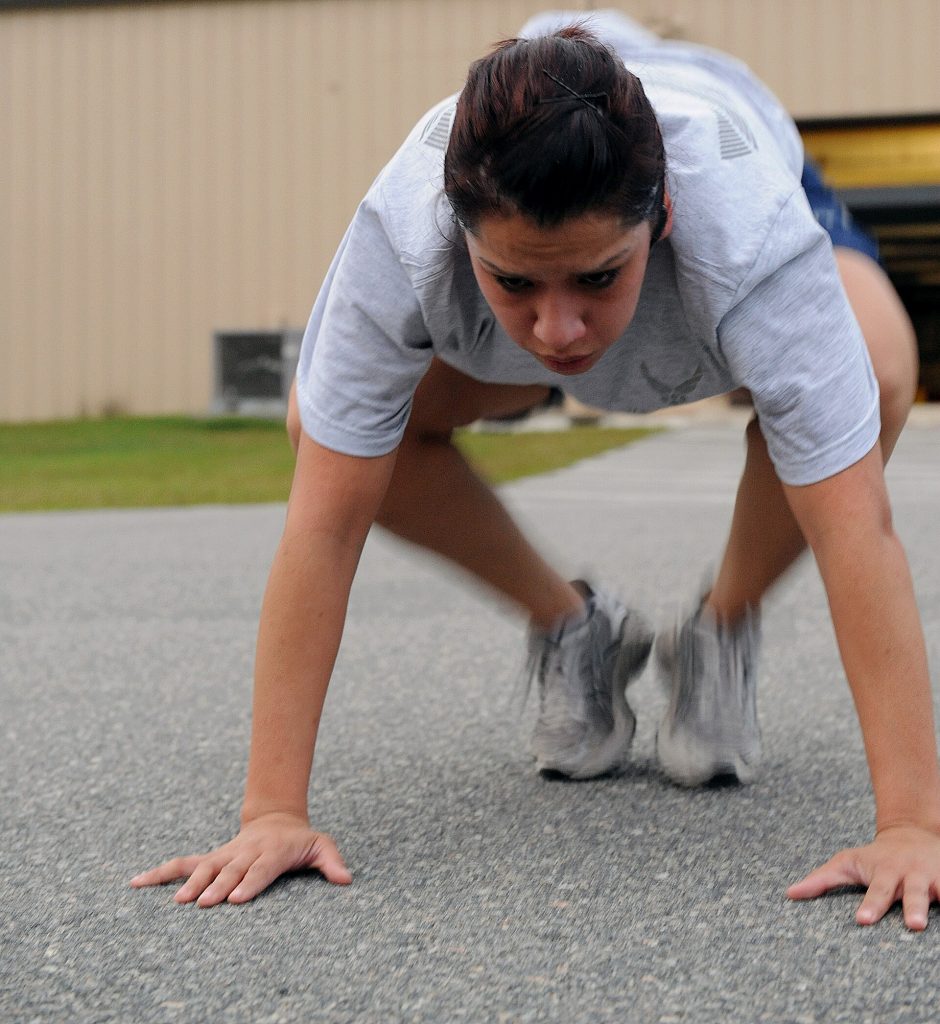
Beginner HIIT (12 minutes): after a warm-up, do 30 seconds work / 30 seconds rest of: jumping jacks or step jacks · bodyweight squats · fast high knees (or marching) · squat thrusts (step back instead of jumping) – repeat 3 rounds.
HIIT also slightly raises energy use after exercise (the “afterburn” or EPOC), though this effect is smaller than often claimed – the main benefit is lots of work in little time. Start with one or two sessions per week.
2. Squats
The king of lower-body exercises: squats load the quadriceps, glutes and hamstrings – the biggest muscles in your body – and translate directly into everyday life (sitting down, standing up, lifting).
- Feet hip- to shoulder-width apart, toes slightly out.
- Push hips back and bend the knees as if sitting on a chair; chest proud.
- Knees track over the toes; heels stay down.
- Go as low as you can with a neutral back, then drive up through the whole foot.
Dose: 3 × 12–15. Progress with a backpack, dumbbell (goblet squat) or slower lowering.
3. Lunges
Lunges train one leg at a time, improving balance and fixing left–right differences. They hit the quadriceps and glutes hard and stretch the hip flexors – great for people who sit a lot.
- Take a long step forward, lower until both knees are around 90°.
- Front knee over the middle of the foot; torso upright.
- Push back to standing. Alternate legs or do walking lunges.
Dose: 3 × 8–12 per leg. Easier: reverse lunges (step backwards).
4. Step-ups and stairs
Climbing stairs is one of the most intense everyday activities – around 8 METs, similar to running at a moderate pace. Step-ups bring that into your workout.
- Use a stable bench, box or stair (knee height or lower).
- Place the whole foot on the step and drive up through the heel; avoid pushing off the back foot.
- Lower with control.
Dose: 3 × 10 per leg – or simply take the stairs every chance you get. In PHYSTEP, every stair works the Phy-TP®-stimulated thigh muscles.
5. Brisk walking (especially uphill)
Underrated and incredibly effective: walking is easy on the joints, needs no recovery and can be done every day. Brisk walking (around 5–6 km/h) burns roughly 3.5–5 METs; walking uphill or on an incline treadmill burns much more. Combine a daily step goal of 7,000–10,000 with one longer weekly walk or hike. Our 10,000 steps guide explains the science.
6. Cycling
Whether you commute by bike or ride a stationary bike, cycling is a joint-friendly way to burn a lot of energy, with the quadriceps doing most of the pushing and the hamstrings helping on the upstroke. Moderate cycling burns around 6–8 METs. Commuting by bike also turns travel time into training time.
Your weekly fat-loss plan
| Day | Workout | Time |
|---|---|---|
| Monday | Strength: squats, lunges, step-ups, glute bridges (3 rounds) | 30 min |
| Tuesday | Brisk walk or bike commute + step goal | 40 min |
| Wednesday | Beginner HIIT + core | 20 min |
| Thursday | Active recovery: walk, stretching | 30 min |
| Friday | Strength (repeat Monday, add weight or reps) | 30 min |
| Saturday | Long walk, hike or bike ride | 60–90 min |
| Sunday | Rest – easy steps only | — |
Common mistakes
- Doing only cardio – add strength to protect muscle.
- Going too hard too soon – HIIT every day leads to fatigue and injury.
- “Earning” food with workouts – exercise burns less than most people think; nutrition matters.
- Sitting the rest of the day – a 30-minute workout doesn’t cancel 10 hours of sitting.
- Expecting spot reduction – crunches don’t burn belly fat specifically.
Frequently asked questions
Which is better for fat loss: cardio or strength training?
Both. Cardio (walking, cycling, running, HIIT) burns more energy per session, while strength training helps you keep and build muscle while you lose fat, which supports your metabolism and body shape. The combination wins.
How fast can I safely lose fat?
A common recommendation is around 0.5–1% of body weight per week. Faster loss is harder to maintain and more likely to cost muscle. Talk to a doctor or dietitian for personal advice.
Do I need a gym?
No. Every exercise in this guide can be done at home or outdoors with your body weight, stairs, a backpack and a bike. A gym simply makes progression with weights easier.
How long until I see results?
Many people feel fitter within two to three weeks; visible changes typically take six to twelve weeks of consistent training, everyday movement and sensible eating.
Sources & further reading
- Tabata I, Nishimura K, Kouzaki M, et al. Effects of moderate-intensity endurance and high-intensity intermittent training on anaerobic capacity and VO2max. Medicine & Science in Sports & Exercise. 1996;28(10):1327–1330.
- World Health Organization. WHO guidelines on physical activity and sedentary behaviour. 2020.
- Ainsworth BE, et al. Compendium of Physical Activities.
Consult your doctor before starting a new exercise programme, especially if you have health conditions or injuries.
Tags: fat loss, HIIT, squats, workout plan

Written by the PHYSTEP team in Riga with input from our physiotherapist. Our articles are for general education and are not a substitute for personal medical advice. About us